RAY LAROSE · MINIATURES
Notes from my painting desk
The paints and steps behind each finished model, and the recipes I come back to.
Try
53 painted schemes 259 photos 43 recipes 162 paint matches
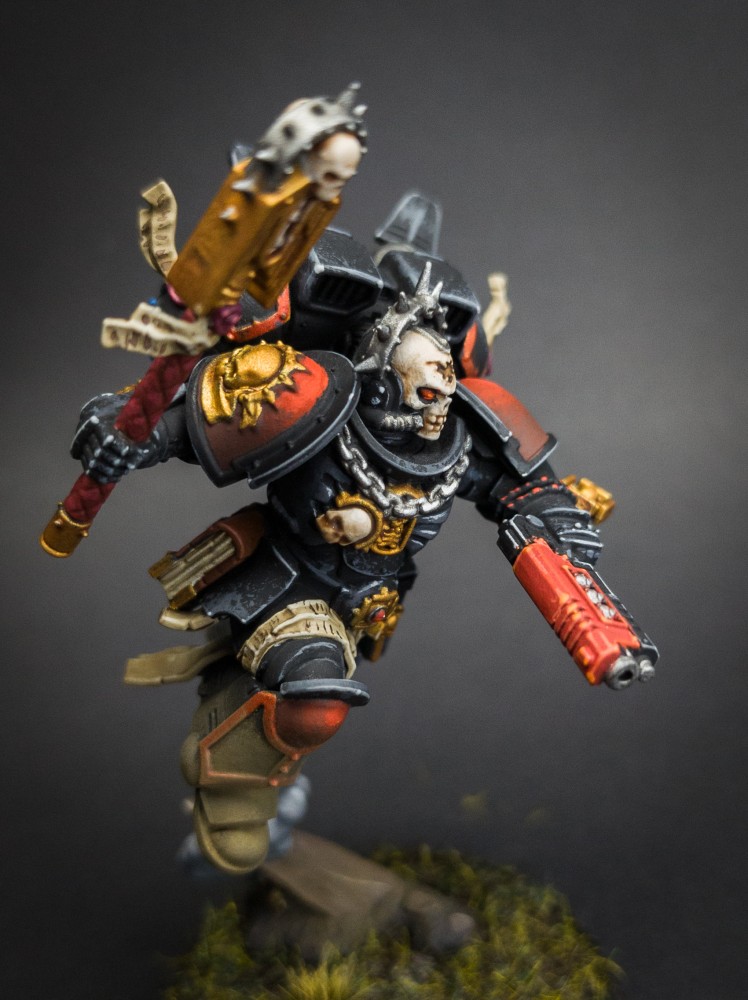
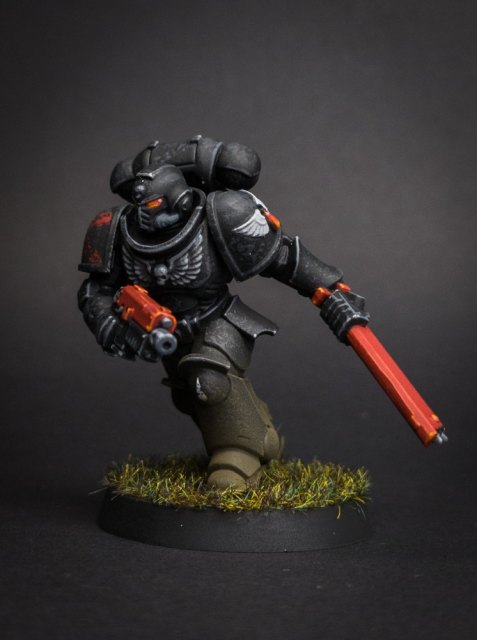

Fresh off the bench
The newest finished schemes, each with every paint and step.
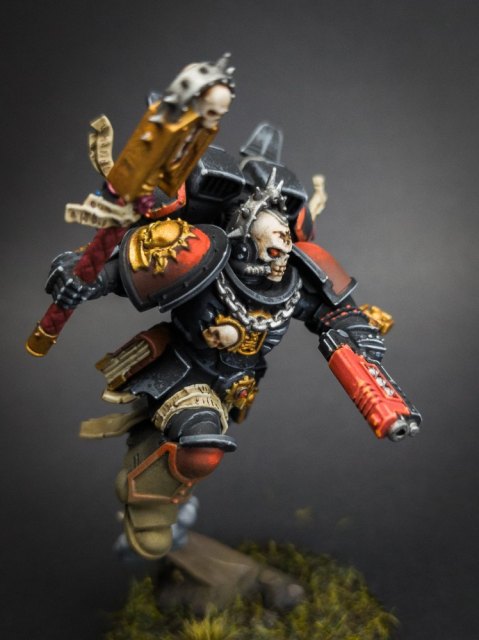
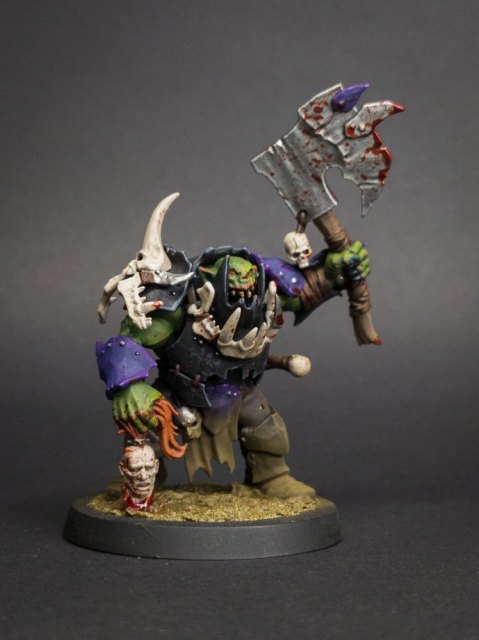
Find your army
Paint schemes for Warhammer 40k, Blood Bowl, Age of Sigmar and Necromunda and more. Pick a game or an army to see how I painted it.
Learn a part
Miniature painting recipes for one part at a time, like armour, flesh and weapon, each a short list of steps you can follow at the desk.
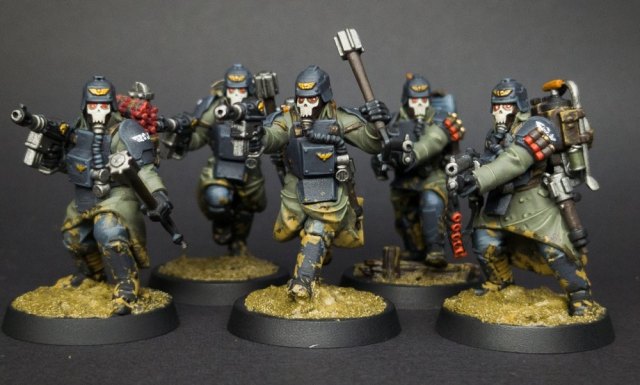
Switching paint brands?
162 Citadel colours matched to Vallejo, Pro Acryl and Two Thin Coats, by eye, with how close each match really is. Search any name from any brand.
Open the conversion chart →New to painting? Start here
Four short recipes, in this order. Each one adds a single new skill.
 1
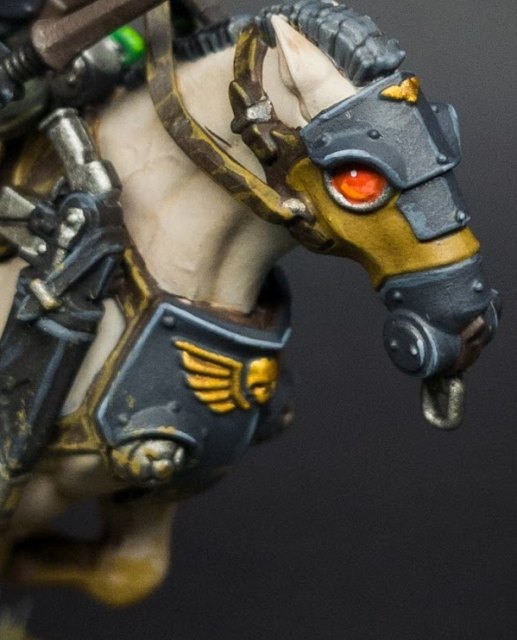
Gold
4 stepsThe basecoat, wash, highlight sequence most metal is built on.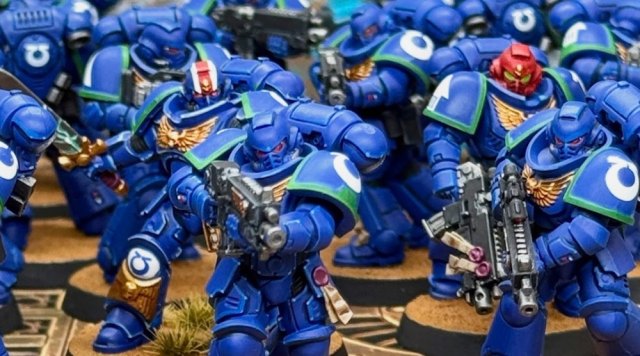 2
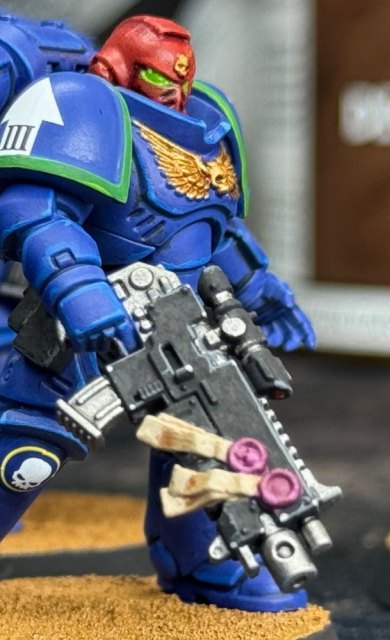
Ultramarine Armour
4 stepsThe same idea with an edge highlight, which is what makes armour read as armour.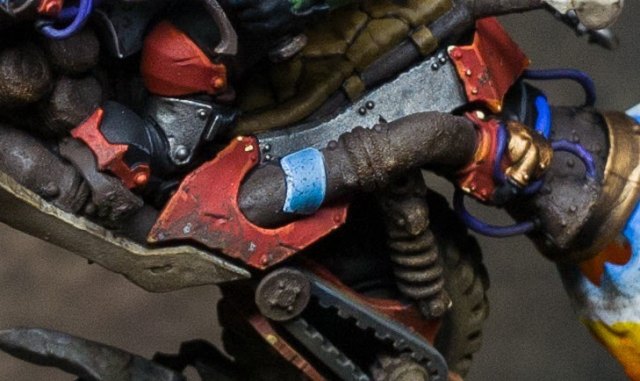 3
Rust
3 stepsStippling and drybrushing, and hard to get wrong.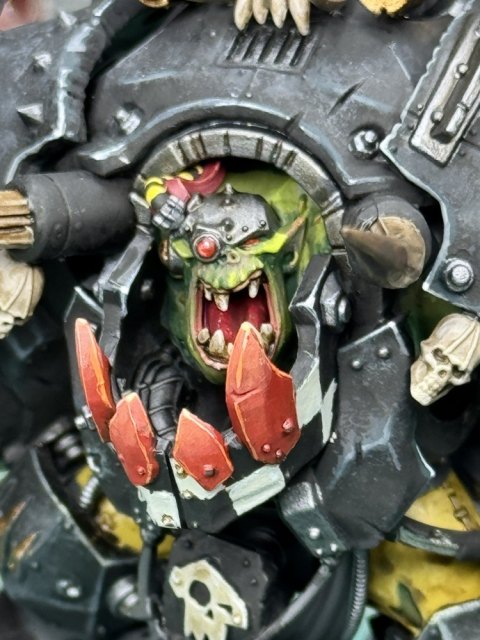 4
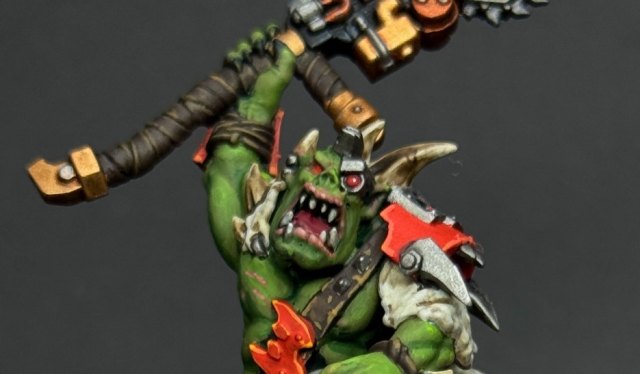
Ork Flesh
9 stepsThe whole ladder: a basecoat, two layers, a highlight, then glazes to blend it together.Before you start, and what the technique words mean
- Thin your paint
- Almost everything here goes on thinner than it comes out of the pot. Neat paint dries thick and fills in the detail you paid for. Add water a drop at a time on a palette until it runs somewhere between milk and heavy cream, depending on the brand, then build the colour up in two or three coats rather than one.
- Start on a primed model
- Unless a step says otherwise, every recipe here begins on a model that has already been primed - paint will not sit properly on bare plastic. Black unless the scheme says otherwise, which is what most of these were painted over.
- The same words mean two things
- Wash, shade and layer are both things you do and names Citadel puts on pots. The badge on a step is the action. The Type column in the paint list is which range the pot came from. A step badged "layer" is often painted with a Base paint, and that is not a mistake.
- basecoat
- The first solid colour over primer. Two thin coats beat one thick one.
- highlight
- A lighter colour on the parts that would catch the light.
- layer
- A slightly lighter colour over part of the coat below, leaving its edges showing.
- wash
- Thin, watery paint that runs into the recesses and shades the whole area at once.
- edge
- A highlight along a sharp edge only, painted with the side of the brush.
- shade
- Darker paint placed deliberately in the shadows rather than left to flow.
- glaze
- Heavily thinned paint over dry paint, to tint it and soften the join between two colours.
- stipple
- Dabbed on with the tip of the brush for a broken, rough, mottled surface.
- drybrush
- Almost-dry paint dragged across raised texture so it catches only the high points.
- blend
- Two colours worked into each other while both are wet, so there is no visible line.
- special
- Anything that is not one of the above. The step note says what it is.
Paint Schemes
How I painted each model: the exact paints, the order they went on, and the finish they gave.
Before you start, and what the technique words mean
- Thin your paint
- Almost everything here goes on thinner than it comes out of the pot. Neat paint dries thick and fills in the detail you paid for. Add water a drop at a time on a palette until it runs somewhere between milk and heavy cream, depending on the brand, then build the colour up in two or three coats rather than one.
- Start on a primed model
- Unless a step says otherwise, every recipe here begins on a model that has already been primed - paint will not sit properly on bare plastic. Black unless the scheme says otherwise, which is what most of these were painted over.
- The same words mean two things
- Wash, shade and layer are both things you do and names Citadel puts on pots. The badge on a step is the action. The Type column in the paint list is which range the pot came from. A step badged "layer" is often painted with a Base paint, and that is not a mistake.
- basecoat
- The first solid colour over primer. Two thin coats beat one thick one.
- highlight
- A lighter colour on the parts that would catch the light.
- layer
- A slightly lighter colour over part of the coat below, leaving its edges showing.
- wash
- Thin, watery paint that runs into the recesses and shades the whole area at once.
- edge
- A highlight along a sharp edge only, painted with the side of the brush.
- shade
- Darker paint placed deliberately in the shadows rather than left to flow.
- glaze
- Heavily thinned paint over dry paint, to tint it and soften the join between two colours.
- stipple
- Dabbed on with the tip of the brush for a broken, rough, mottled surface.
- drybrush
- Almost-dry paint dragged across raised texture so it catches only the high points.
- blend
- Two colours worked into each other while both are wet, so there is no visible line.
- special
- Anything that is not one of the above. The step note says what it is.
Recipes
Methods I reuse across models - skin, metal, armour, cloth and the rest. Each step is one named paint, one technique and a note. Unless a step says otherwise, every recipe here starts on a primed model - the scheme that uses it usually says which colour.
Paint Inventory
The paints I actually own - every pot on my shelf, not a catalogue of what exists. This is what the schemes and recipes are painted with.
| Paint | Brand | Type | Hue | Used in |
|---|
Paint Conversion Chart
Citadel colours matched to their closest Vallejo, Pro Acryl and Two Thin Coats equivalents, by eye, over time. Nothing here is a measured colour match - the dots say how close each one really is.
Still filling this in: 8 of the 108 colours used in the recipes here have no row yet. Mostly Vallejo. A blank means not mapped, not that no equivalent exists.
How close the match is:
near identical
usable
avoid
4 how many of my recipes and schemes use it - tap one to see them
| Citadel | Vallejo | Pro Acryl | Two Thin Coats |
|---|